
kaizen: the science of small, lasting change
show up first. improve later
In a world obsessed with dramatic breakthroughs, overnight success, and radical reinvention, the most powerful form of change is often the quietest.Kaizen, a Japanese philosophy meaning “continuous improvement”, invites us to grow not through force, but through gentleness. Not through extremes, but through consistency. And remarkably, modern science now confirms what this ancient wisdom has always known: small changes are how the brain truly transforms.
Let’s begin gently.
Think of one small change you would like to make in your life.
It might be eating more mindfully, saving a little money each month, or letting go of a habit that no longer serves you.
If you have tried before and found it difficult, you are not alone. Change is hard — not because we lack discipline, but because the human brain is designed to resist sudden disruption.
Why Change Feels So Difficult
From a scientific perspective, abrupt change activates the brain’s stress response. When the brain perceives threat or pressure, it shifts into a protective mode. Creativity narrows. Motivation drops. Good intentions fade.
This is why dramatic resolutions so often fail — even when we truly want change.
The Myth of Radical Change
We are taught that if we want better health, deeper confidence, or a more fulfilling life, we must overhaul everything at once. New routines. New rules. New identities.
But neuroscience tells a different story.
When we attempt sudden, large changes, the brain often perceives them as a threat. This activates the amygdala — the brain’s fear centre — triggering stress hormones such as cortisol. Under stress, creativity drops, motivation collapses, and willpower fades.
This is why extreme resolutions so often fail.
Kaizen Offers a Different Path
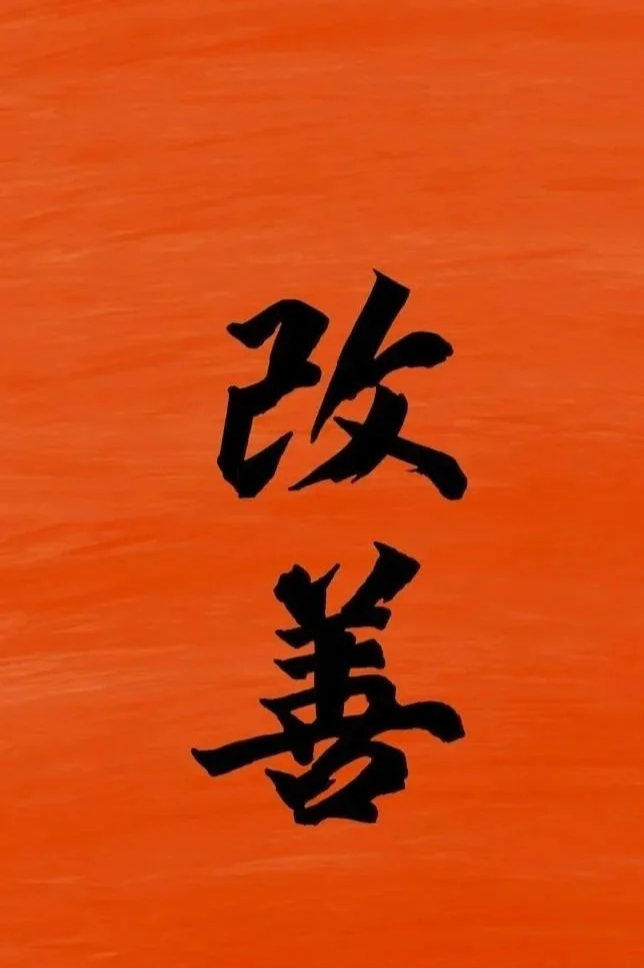
改善(Kaizen) means change for the better.
It is a philosophy built on one simple idea: meaningful transformation happens through small, consistent steps.
Rather than forcing the brain to adapt all at once, Kaizen works quietly. It lowers resistance. It feels safe. And because it feels manageable, it lasts.
Science supports this approach. Small actions repeated over time help the brain form new patterns without triggering stress. Change becomes something the nervous system can accept — even welcome.
Kaizen and the Brain: A Neurological Match
Kaizen works with the brain, not against it.
Research into neuroplasticity shows that the brain changes most effectively through repetition of small, low-stress behaviours. Each tiny action creates a new neural pathway. Repeated often enough, that pathway strengthens — until the behaviour becomes automatic.
Small steps feel safe. And safety is essential for learning.
By keeping changes almost too small to fail, Kaizen avoids triggering fear responses, allowing the nervous system to stay calm and receptive. Over time, the brain adapts — not through pressure, but through familiarity.
This principle is echoed throughout behavioural science and is foundational to research on habit formation.
Why Tiny Actions Outsmart Willpower
Willpower is finite. It fluctuates with sleep, stress, hormones, and emotional state. Kaizen bypasses willpower entirely.
Instead of asking:
“Can I completely change my lifestyle?”
Kaizen asks:
“What is the smallest possible action I can take today?”
From a psychological perspective, this reduces decision fatigue and increases self-efficacy — the belief that “I am someone who follows through.”
Each small success reinforces identity. And identity change is what sustains transformation.
Stress Reduction and Long-Term Consistency
Chronic stress is one of the greatest barriers to personal growth. Studies consistently show that high stress impairs memory, focus, emotional regulation, and immune function.
Kaizen naturally lowers stress by:
Removing urgency
Eliminating self-criticism
Creating progress without overwhelm
This aligns with findings from health psychology showing that compassionate, incremental approaches outperform harsh, all-or-nothing strategies in long-term behaviour change.
Think Smaller Than You Think You Should
Kaizen asks us to rethink progress.
Instead of asking:
“How do I fix everything?”
We ask:
“What is the smallest step I can take today?”
One minute of movement.
One thoughtful question.
One intentional pause.
These steps may feel almost insignificant — but they are powerful. Small actions build trust with yourself. And trust is what allows habits to grow.
The Quiet Power of Mental Rehearsal
Change does not begin only with action. It also begins with imagination.
By mentally rehearsing a future situation — calmly, briefly, without pressure — the brain starts to feel familiar with what once felt intimidating. This reduces fear and builds confidence before action ever takes place.
In Kaizen, even thoughts are kept small. No pressure. No perfection. Just gentle preparation
Why Small Rewards Matter
Large rewards often create pressure. Small rewards create ease.
Acknowledging yourself for a tiny effort — a kind word, a moment of rest, a simple pleasure — reinforces progress without stress. This keeps motivation alive and change sustainable.
Kaizen as a Way of Living
Kaizen is not about rushing toward a destination.
It is about refining the journey.
In relationships, it is the small gestures that build connection.
In health, it is consistency, not intensity, that restores balance.
In life, it is attention to the everyday that creates meaning.
Kaizen in Everyday Life
Kaizen is not about ambition without depth. It is about alignment.
One extra glass of water
One minute of mindful breathing
One kind thought replacing self-judgement
One small boundary honoured
Individually, these actions seem insignificant. Neurologically and emotionally, they are not.
Over time, the brain rewires. Habits shift. Identity evolves. And life changes — quietly, but permanently.
As outlined in applied Kaizen psychology, small steps gradually reprogram the brain for success rather than resistance, allowing larger changes to emerge naturally rather than being forced
A Philosophy for a Sustainable Life
Kaizen mirrors the rhythms of nature: slow growth, steady roots, quiet strength. It is deeply compatible with a Mediterranean way of living — where wellbeing is cultivated daily, not demanded instantly.
Transformation does not require pressure.
It requires presence.
And a willingness to begin — gently.
Not tomorrow. Not perfectly. But today.
A Final Thought
Change does not need to be dramatic to be profound.
Start where you are.
Begin smaller than feels necessary.
Repeat gently.
Over time, those quiet steps accumulate — and something lasting takes shape.
That is the science of Kaizen.
And it is anything but small.
References
Lally, P., van Jaarsveld, C. H. M., Potts, H. W. W., & Wardle, J. (2010).
How are habits formed: Modelling habit formation in the real world.
European Journal of Social Psychology, 40(6), 998–1009.
→ Demonstrates that habits form through small, repeated behaviours over time, not intensity or motivation.Gardner, B., Lally, P., & Wardle, J. (2012).
Making health habitual: The psychology of “habit-formation” and general practice.
British Journal of General Practice, 62(605), 664–666.
→ Supports incremental change as the most effective method for sustainable health behaviours.McEwen, B. S., & Akil, H. (2020).
Revisiting the concept of stress: Implications for affective disorders.
Journal of Neuroscience, 40(1), 12–21.
→ Explains how chronic stress inhibits learning and change, reinforcing the value of low-stress, gradual approaches such as Kaizen.Wood, W., & Rünger, D. (2016).
Psychology of habit.
Annual Review of Psychology, 67, 289–314.
→ Shows that automatic behaviours emerge from small contextual repetitions, not conscious effort.Clear, J. (2018).
Atomic Habits. Avery Publishing.
→ Synthesises behavioural science research demonstrating how tiny behavioural changes compound into profound long-term transformation.Tang, Y. Y., Hölzel, B. K., & Posner, M. I. (2015).
The neuroscience of mindfulness meditation.
Nature Reviews Neuroscience, 16(4), 213–225.
→ Provides evidence that small, consistent mental practices reshape brain structure and emotional regulation.