fix your core to improve your health
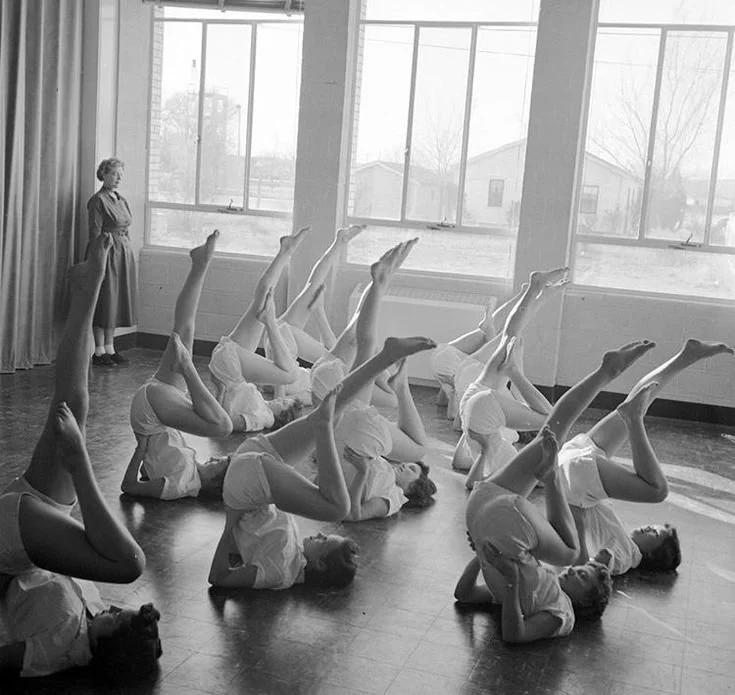
your core is the foundation of strength, balance, and posture. When it’s weak, movement feels harder and tension builds. By strengthening your core through mindful exercise and breath, you support your spine, improve digestion, and boost overall energy. A strong core means a healthier, more balanced body — from the inside out.
the core has an image problem. we hear the word and picture a flat stomach, a six-pack, a summer photo. so we chase it with crunches, or we ignore it altogether. both miss the point. your core is not a decoration — it is the structure that holds you upright, lets you breathe, transfers force between your top half and your bottom half, and protects your spine every time you move. it is a foundation, not an ornament. and like most foundations, you only notice it when it fails.
it's a cylinder, not a six-pack
the "six-pack" is one thin sheet of muscle on the front. the real core is a cylinder wrapped around your middle: the deep abdominal muscles that girdle the spine like a corset, the muscles running up the back, the diaphragm forming the roof, and the pelvic floor the base. it works as one unit — a canister of pressure that stiffens to keep the spine safe while your arms and legs do their work.
here is the detail that changed how i think about it. in people without back pain, the deepest of those muscles fires a fraction of a second before you move your arm — the body braces the spine in anticipation, before the load ever arrives. in people with back pain, that timing is delayed. the core, at its best, is not a muscle you flex. it is a reflex that protects you, quietly, ahead of time.
the honest bit about your back
back pain is where the core matters most to people, so let me be honest about the evidence. exercise genuinely helps chronic low back pain — that is one of the better-supported things we know in the whole of medicine. but the elaborate "core-specific" programmes and the clever gadgets do not beat plain general exercise. when researchers compared them head to head, the outcomes were much the same. that is oddly freeing: you do not need the perfect protocol or the machine. you need to move, and to keep moving. the best exercise for your back is, more or less, the one you will actually do.
why the plank earns its place
if you are going to do one deliberate core exercise, though, make it the plank — and here is the reasoning, because it matters. the core's real job is not to create movement but to resist it: to hold the spine still while everything else moves. the plank trains exactly that — a braced, motionless trunk. the sit-up and the crunch do the opposite, bending the spine again and again, which is precisely the load a spine least enjoys. so the plank is not just efficient — no kit, a minute or two, endlessly scalable — it is the honest one, because it rehearses what the core is actually for. this is the kind of training that sits in the injury-prevention column, not the vanity one.
why it matters more as you age
now the part almost no one is told. trunk strength is one of the quiet foundations of balance — and balance is what keeps you upright and independent as the years pass. the research on older adults is consistent: a stronger trunk means better balance, better everyday function, and fewer falls. and falls, in later life, are not a small thing — they are one of the events that most changes how the rest of a life goes. the core you build now is the steadiness you keep later. that is preventive medicine, written into a muscle.
the practical version
no gadget, no hundred crunches. five things, most days:
stand tall. ears over shoulders over hips. unfold out of the chair instead of collapsing into it.
get up off the floor without your hands — once a day. it's a core test and a core exercise at once.
carry something heavy on a walk. loaded carries are core work in disguise.
hold a plank — not sit-ups (they bend the spine you're protecting; the plank braces it).
walk. the simplest core work there is, and the easiest to keep.
small, unglamorous, daily — which is usually the sign something works.
how to hold a plank (properly)
most of the benefit is in the form, so keep it simple:
forearms down, elbows directly under your shoulders.
one straight line from head to heels — no sag in the hips, no piking up.
brace your belly as if you're about to be poked in the stomach, and squeeze your glutes.
keep breathing — steady, not held.
hold twenty seconds, rest, repeat two or three times. add a few seconds each week.
if your hips drop or your lower back starts to ache, you've held too long — stop, rest, go again. quality over minutes.
this is what preventive medicine actually looks like — not a scan or a supplement, but the small, daily things done for long enough to matter. it is the whole of what i mean by preventive medicine, lived.
don't wait to feel ready. show up first, improve later.
— A Esmaeili
References
Hodges, P. W., & Richardson, C. A. (1996). Inefficient muscular stabilization of the lumbar spine associated with low back pain: a motor control evaluation of transversus abdominis. Spine, 21(22), 2640–2650. doi:10.1097/00007632-199611150-00014
Hayden, J. A., Ellis, J., Ogilvie, R., Malmivaara, A., & van Tulder, M. W. (2021). Exercise therapy for chronic low back pain. Cochrane Database of Systematic Reviews, 9, CD009790. doi:10.1002/14651858.CD009790.pub2
Wang, X. Q., Zheng, J. J., Yu, Z. W., et al. (2012). A meta-analysis of core stability exercise versus general exercise for chronic low back pain. PLoS ONE, 7(12), e52082. doi:10.1371/journal.pone.0052082
Huxel Bliven, K. C., & Anderson, B. E. (2013). Core stability training for injury prevention. Sports Health, 5(6), 514–522. doi:10.1177/1941738113481200
Granacher, U., Gollhofer, A., Hortobágyi, T., Kressig, R. W., & Muehlbauer, T. (2013). The importance of trunk muscle strength for balance, functional performance, and fall prevention in seniors: a systematic review. Sports Medicine, 43(7), 627–641. doi:10.1007/s40279-013-0041-1