before we had a word for it
A surgeon's case for living well
Mallorca. Anne Marie has lived there for thirty years.
Every morning, she makes her own yoghurt mixture. She grows things, spends hours in the garden, eats almonds from her own trees and prepares food slowly, often with people she loves.
She uses aloe vera, drinks it and applies it to her skin. She fasts — not because someone told her to, but because it feels natural. She spends little time looking at screens, and she moves throughout the day.
She has never called any of this a routine. She has never tracked it, optimised it or turned it into a programme. She has simply lived it.
And it made me think about something we seem to have forgotten.
Before we had a word for it, people simply lived it.
There was no programme. No subscription. No industry. Today we call it longevity — and somewhere in the naming, we may have lost the thing itself.
the business of living longer
We have become fascinated with longevity. Cold plunges. Supplements. Sleep trackers. Intermittent fasting. Protein. Creatine. Strength training. Meditation. The latest technology promising to tell us how old our bodies really are.
I believe in many of these practices. I lift weights. I pay attention to protein, sleep and what I eat. I practise intermittent fasting and meditation. I enjoy tennis, walking and occasionally cold water. I believe in building muscle, maintaining cardiovascular fitness and protecting the quiet moments in an increasingly noisy world.
Some of these practices are supported by decades of scientific evidence. Others are promising, personally useful or simply enjoyable.
But somewhere along the way, we started selling ordinary healthy behaviours as extraordinary discoveries. And that is where I become sceptical. Not of the science — of the noise surrounding it.
I am not alone in this. A recent essay in the BMJ called it a "longevity delusion" — money, myths and bad science. It describes a goldrush: biotech firms, private clinics, wellness resorts, influencers selling a dream the evidence never delivered.
One molecule was once called almost miraculous, and sold to a drug company for a fortune. Then the science quietly fell apart. For decades we have been told we are about to live to 120. We don't.
The essay's sharpest point is also its quietest. The things that truly lengthen lives — prevention, and the conditions people live in — are the ones with no money in them. And perhaps that is exactly why they work.
what twenty-three years in surgery taught me
I have spent twenty-three years operating, and four years before that assisting at the operating table as a medical student.
You learn a great deal about the human body when you see what happens after years of neglect. Damaged arteries. Diseased hearts. Poorly controlled blood pressure. Diabetes. Frailty. Muscles that have slowly disappeared.
These conditions rarely arrive overnight. They develop quietly, often over decades. And the things that might have helped prevent or delay them are frequently rather ordinary: movement, nutrition, sleep, strength, blood pressure control, not smoking, relationships.
Not glamorous. Not particularly marketable. But important.
A cold plunge might help someone feel alert or recover after exercise. It does not replace blood pressure treatment. Creatine can improve performance during resistance training. It has not been shown to extend human life. Intermittent fasting can be a useful way to manage eating patterns and metabolic health. It is not established as a superior route to living longer.
We should be able to appreciate a practice without turning it into a miracle.
the numbers that matter
Much of modern health culture focuses on what is easy to measure. Weight. Steps. Calories. Sleep scores. These can be useful — but they are only part of the picture.
Blood pressure, blood lipids, blood glucose, cardiorespiratory fitness and muscle strength tell us something important about our future health.
A large study published in Circulation in 2018 estimated that people who followed five healthy lifestyle factors could gain roughly twelve to fourteen additional years of life expectancy compared with those who followed none. That is a population estimate, not a promise to any individual.
Other research has repeatedly associated higher cardiorespiratory fitness and greater muscle strength with lower mortality. And strong social relationships have been associated with substantially better survival.
The science does not suggest one magic habit. It suggests that several ordinary behaviours, repeated over time, matter.
muscle, movement and the people around us
I believe strength training is one of the most valuable things we can do as we age. Muscle is not simply about appearance. It supports mobility, balance, physical independence and metabolic health.
But I would not replace cardiovascular exercise with weights. We need both. We need to be strong enough to carry our shopping and fit enough to climb the stairs.
And perhaps we need something else that cannot be measured so easily.
People.
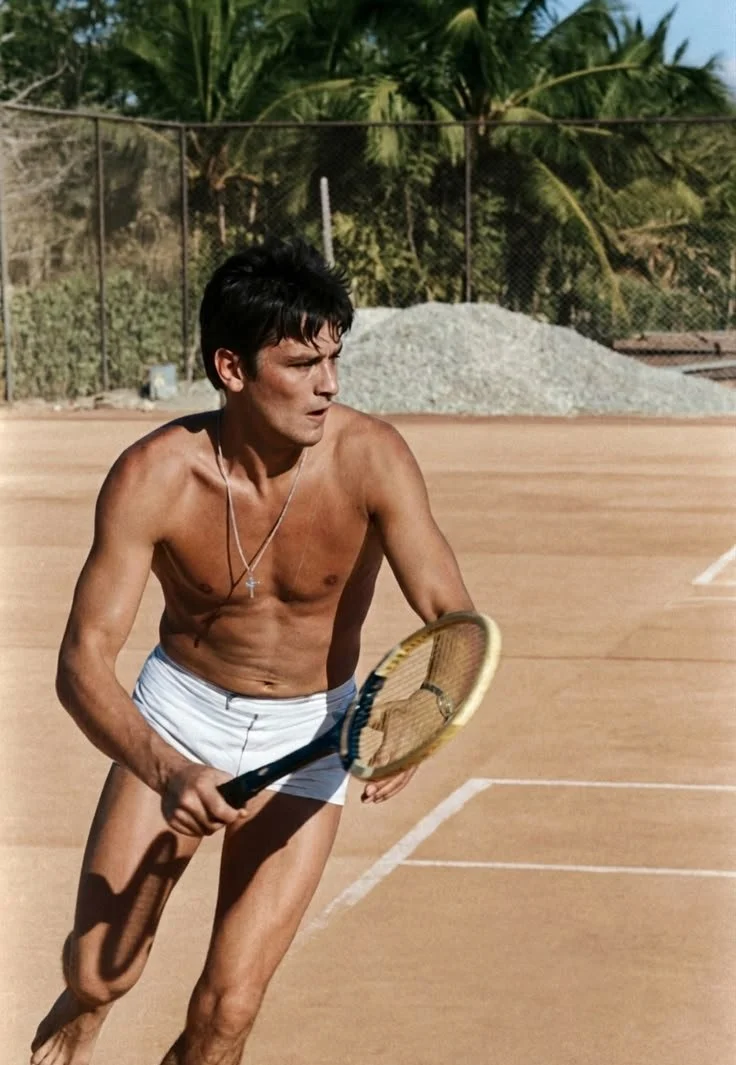
In the Copenhagen City Heart Study, participation in sports such as tennis was associated with longer life expectancy. The study was observational, so it cannot prove that tennis itself caused the difference. But I find the social dimension fascinating — the conversation before the game, the laughter afterwards, the coffee, the friendships.
Perhaps the most valuable part of exercise is not always the exercise itself. Sometimes it is the reason we keep showing up.
the things we cannot buy
We can buy a sleep tracker. We cannot buy a good night's sleep. We can buy a gym membership. We cannot buy the habit of going. We can buy supplements. We cannot buy the years of consistent behaviour that make a difference.
And we can spend a fortune trying to optimise our lives while forgetting to enjoy them.
That is what I find so interesting about Anne Marie. She has not built her life around a health protocol. She has built a life in which many healthy behaviours happen naturally. The garden provides movement. The food has a connection to the land. The daily rhythm allows moments of quiet. Meals bring people together.
Of course, her habits do not prove that she will live longer. One person's experience is not scientific evidence, and not every traditional practice has demonstrated medical benefits.
But her life illustrates something important. Healthy behaviour does not always have to feel like an intervention. It can simply become part of living.
A quiet morning by the pool in Mallorca.
prevention begins with us
This is also why I care so deeply about preventive medicine within healthcare. We spend our professional lives treating disease. Yet the people delivering that care often struggle to find time to look after themselves — doctors, nurses, healthcare assistants, porters, cleaners, administrators.
We cannot talk seriously about prevention while ignoring the working conditions, food environments, stress and daily routines of the people who deliver healthcare.
That is the thinking behind the 1828 Project. Not another wellness programme built around promises, but a practical attempt to make healthier choices easier, more accessible and more ordinary in the places where we work. Better food. More movement. Space to connect. Small changes in the environment that can become lasting habits.
Because prevention should not depend entirely on individual willpower. The environment matters too.
This is not a new idea. Michael Marmot has spent a career showing that the things around us — income, housing, environment, relationships, community — shape how long, and how well, we live. Prevention is not only personal. It is also social.
And beneath all of it is a word we do not say often enough.
Care.
The people who spend their lives caring for others are quietly running short of it themselves. A system that stops caring for its carers slowly loses them. Prevention, if it means anything, begins there.
simple is the sophistication
I am not against longevity science. I welcome serious research into ageing, metabolism, muscle, nutrition and disease prevention.
I am not against cold plunges, creatine, intermittent fasting or wearable technology. I use some of these things myself.
What I question is the idea that every useful habit needs a new name, a subscription or an expensive product attached to it.
We do not need to reject modern science to appreciate the wisdom of ordinary living. And we do not need to romanticise the past to recognise that some things were worth keeping.
Move regularly. Build strength. Protect your cardiovascular health. Sleep. Eat well. Know your numbers. Make time for people. Find a little silence. Repeat.
Anne Marie has been doing many of these things for thirty years. Long before they became fashionable.
I am not interested in living forever. I am interested in living well for as long as possible.
Simple is not the cheap version of sophisticated. Simple is the sophistication.
show up first. improve later.™
— A Esmaeili
references
Li Y, et al. Impact of Healthy Lifestyle Factors on Life Expectancies in the US Population. Circulation. 2018;138(4):345–355. doi:10.1161/CIRCULATIONAHA.117.032047
Mandsager K, et al. Association of Cardiorespiratory Fitness With Long-term Mortality Among Adults Undergoing Exercise Treadmill Testing. JAMA Network Open. 2018;1(6):e183605. doi:10.1001/jamanetworkopen.2018.3605
Celis-Morales CA, et al. Associations of grip strength with cardiovascular, respiratory, and cancer outcomes and all cause mortality. BMJ. 2018;361:k1651. doi:10.1136/bmj.k1651
Momma H, et al. Muscle-strengthening activities and lower risk and mortality in major non-communicable diseases: systematic review and meta-analysis. British Journal of Sports Medicine. 2022;56(13):755–763. doi:10.1136/bjsports-2021-105061
Schnohr P, et al. Various Leisure-Time Physical Activities Associated With Widely Divergent Life Expectancies: The Copenhagen City Heart Study. Mayo Clinic Proceedings. 2018;93(12):1775–1785. doi:10.1016/j.mayocp.2018.06.025
Holt-Lunstad J, Smith TB, Layton JB. Social Relationships and Mortality Risk: A Meta-analytic Review. PLoS Medicine. 2010;7(7):e1000316. doi:10.1371/journal.pmed.1000316
Smith R. The Longevity Delusion: Money, Myths, and Bad Science [opinion; review of the book by S. O'Mahony]. BMJ. 2026;395:e101072. doi:10.1136/bmj-2026-101072