nine days without sugar
case with sugar - what science says
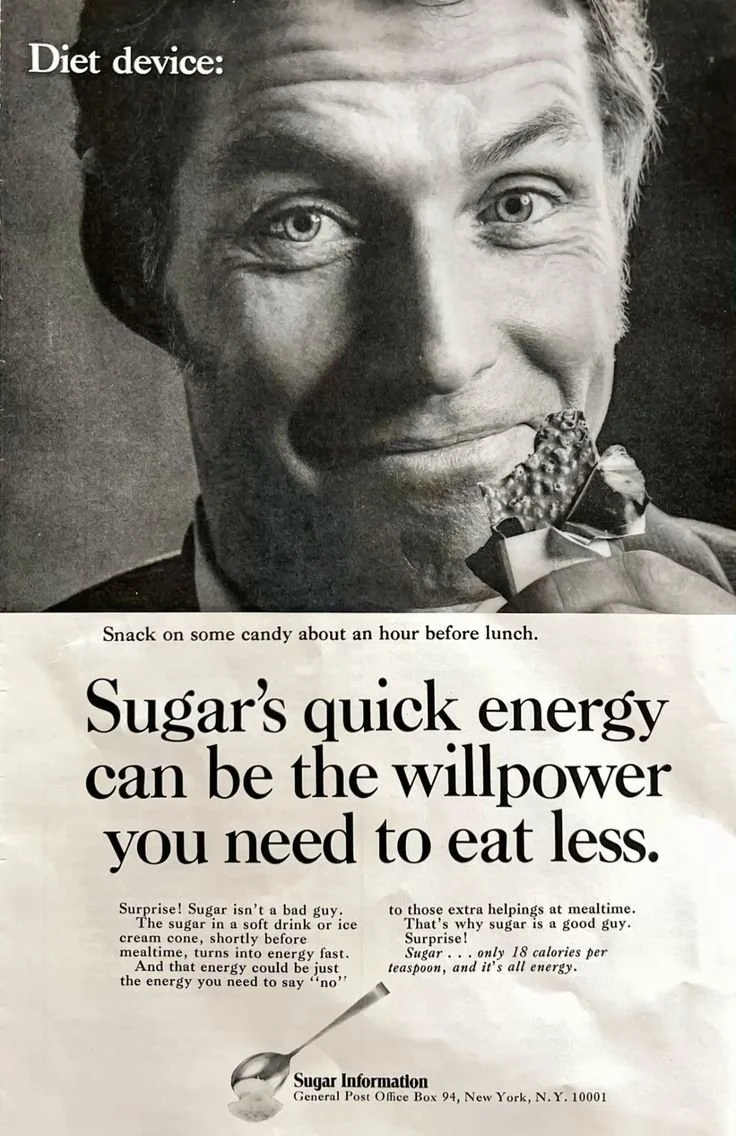
A study went round again this month with a headline attached to it: nine days without sugar reverses liver damage.
The study is real. The headline is not quite.
It is worth separating the two, because what the researchers actually found is more useful than what the caption claims — and considerably harder to argue with.
The design is the whole point
In 2017, Jean-Marc Schwarz and colleagues published a trial in Gastroenterology. Forty-one children, aged nine to eighteen, all with obesity and all consuming more than 50g of fructose a day — roughly the sugar in a litre and a half of cola.
For nine days, every meal was provided for them. Same calories as their usual diet. Same fat. Same protein. Same total carbohydrate. The only change was the kind of carbohydrate: sugar taken out, starch put in, until fructose made up just 4% of daily energy.
Nothing was subtracted. Nothing was restricted in the way that word is usually meant. The children ate the same amount of food and the same amount of energy. One ingredient was swapped for another.
This design matters more than any of the numbers that follow. Almost every dietary study that produces a good result is confounded by the same thing — people ate less, and eating less does a great many good things. Schwarz's group removed that explanation before they started.
What changed in nine days
Measured by MRI and magnetic resonance spectroscopy, before and after:
Liver fat fell from a median of 7.2% to 3.8%.
Visceral fat — the fat around the organs, not the fat you can see — fell from 123 cm³ to 110 cm³.
De novo lipogenesis, the liver's own manufacture of new fat, fell from 68% to 26%.
Insulin kinetics improved.
Nine days.
The third finding is the mechanism. Fructose is handled almost entirely by the liver, and when it arrives in quantity the liver converts a large share of it into fat on site. That conversion rate more than halved in a week and a half. The liver stopped being asked to do something it was never designed to do at that volume, and it stopped doing it.
The obvious objection, already answered
Some of the children lost a small amount of weight anyway, despite the researchers' efforts to keep them weight-stable. So the honest question is whether this was just weight loss wearing a lab coat.
The authors looked. In the subgroup of nine children whose weight did not change at all, the fall in liver fat remained statistically significant. The effect did not depend on baseline liver fat either — the children who started with relatively little lost it too.
A companion paper from the same cohort, published the previous year, found the same pattern across a wider set of measures — blood pressure, triglycerides, fasting insulin, glucose tolerance — and reported the improvements irrespective of weight change.²
The signal survives the obvious objection. That is not nothing.
What it does not show
It does not show that nine days off sugar reverses liver damage. Liver fat is not liver damage. Steatosis — fat in the liver — is the first and most reversible step of a long road that runs through inflammation and scarring to cirrhosis. Nothing in this study measured fibrosis, and nothing in it was reversed in the sense that word implies when it appears above a photograph of a strawberry.
Nor is it a large study. Forty-one children, no parallel control arm, one specific population, nine days. Every meal was prepared and delivered, which is a luxury no household has and the single biggest reason to be cautious about assuming the same result at home.
Others have said so in print. Khan and Sievenpiper wrote to Obesity arguing that a before-and-after design with no control group cannot separate the sugar from everything else that changed when nine days of meals arrived at the door, and that the weight the children lost still confounds the picture.³ The authors replied. The exchange is worth reading precisely because it is unresolved.
None of that is a reason to dismiss it. It is a reason to describe it accurately. A small, well-designed mechanistic study that isolates one variable is often worth more than a large observational one that isolates none.
What I take from it
Two things.
The liver is fast. Faster than most people expect, and faster than most people are told. Nine days is not a programme, a protocol or a transformation. It is a fortnight, minus a long weekend. Organs that have been quietly overloaded for years begin correcting themselves within days of the load coming off. I see the same principle in surgery — tissue recovers on its own timetable, and our job is mostly to stop interfering with it.
Sugar is not simply calories. The children in this study ate exactly the same amount of energy and their metabolism changed anyway. The calorie is a unit of measurement, not a complete description of what food does. Where the carbohydrate goes and what the liver is asked to do with it turns out to matter independently of how much of it there is.
The same group had already run the experiment in the other direction, in adults. Healthy, weight-stable men given a high-fructose diet for nine days — again with identical energy and macronutrients, only the carbohydrate type changed — showed higher de novo lipogenesis and more liver fat than on the starch-based version.⁴ Load it and the liver responds. Unload it and the liver responds. Neither direction required a change in calories.
The practical version of this is unglamorous, which is usually a good sign. Nobody needs to go nine days without sugar. The intervention in this study was a swap, not a sacrifice — and the swap most people can actually make is the liquid one. Sugar-sweetened drinks are where the majority of fructose enters a British diet, and they are the only source that is removed without anything being missed.
One swap. Held daily. Long enough to be boring.
That is the whole of it, and the reason I keep returning to the same position: the small thing repeated beats the large thing attempted. The liver, it turns out, agrees.
show up first, improve later.™
References
Schwarz JM, Noworolski SM, Erkin-Cakmak A, Korn NJ, Wen MJ, Tai VW, Jones GM, Palii SP, Velasco-Alin M, Pan K, Patterson BW, Gugliucci A, Lustig RH, Mulligan K. Effects of Dietary Fructose Restriction on Liver Fat, De Novo Lipogenesis, and Insulin Kinetics in Children With Obesity. Gastroenterology. 2017;153(3):743–752. doi:10.1053/j.gastro.2017.05.043. ClinicalTrials.gov: NCT01200043.
Lustig RH, Mulligan K, Noworolski SM, Tai VW, Wen MJ, Erkin-Cakmak A, Gugliucci A, Schwarz JM. Isocaloric fructose restriction and metabolic improvement in children with obesity and metabolic syndrome. Obesity (Silver Spring). 2016;24(2):453–460. doi:10.1002/oby.21371.
Khan TA, Sievenpiper JL. Metabolic improvement with fructose restriction: is it the fructose or the weight loss? Obesity (Silver Spring). 2016;24(3):549. doi:10.1002/oby.21431. (See also the authors' reply: Lustig RH. Obesity (Silver Spring). 2016;24(3):550. doi:10.1002/oby.21438.)
Schwarz JM, Noworolski SM, Wen MJ, Dyachenko A, Prior JL, Weinberg ME, Herraiz LA, Tai VW, Bergeron N, Bersot TP, Rao MN, Schambelan M, Mulligan K. Effect of a High-Fructose Weight-Maintaining Diet on Lipogenesis and Liver Fat. J Clin Endocrinol Metab. 2015;100(6):2434–2442. doi:10.1210/jc.2014-3678.