the clock inside us
on sleep, rhythm, and the hours we keep
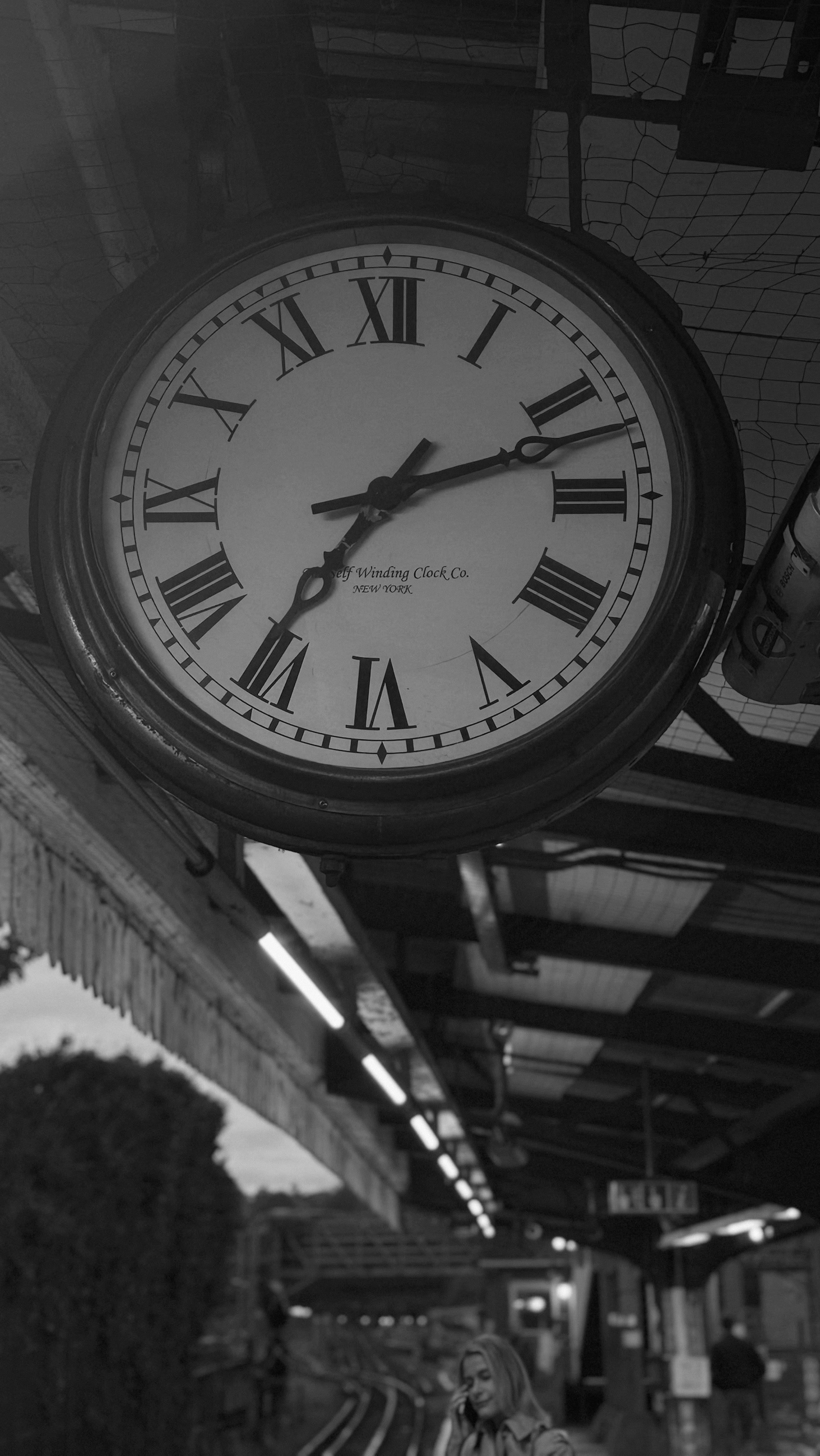
We talk about sleep as though it were a quantity. Seven hours, eight hours, a number on the wrist each morning. Enough, or not enough.
But the body does not count hours. It keeps time. And it turns out that when we sleep — and whether we keep to it — may matter as much as how long.
a clock in every cell
Deep in the brain, just above where the optic nerves cross, sits a cluster of around twenty thousand neurons that acts as the body's master clock. It runs on a cycle of roughly twenty-four hours, and it is set, each day, by light.
But it is not the only clock. Almost every cell in the body keeps its own time — the liver, the muscles, the heart, the gut — and they all take their cue from the master. Blood pressure rises before we wake. Body temperature falls before we sleep. Hormones, appetite, immunity, the repair of tissue: all of it runs to a schedule.
The clock has a partner. From the moment we wake, a chemical called adenosine accumulates in the brain — a by-product of the brain simply being on — and as it builds, so does the pressure to sleep. By evening the pressure is high; a night's sleep clears it; the cycle begins again. Two systems, then: a clock that says when, and a pressure that says how much. Good sleep is what happens when they agree.
This is also, incidentally, what caffeine does. It does not give you energy. It sits in the receptors adenosine would use and hides the pressure from you. The tiredness is still there, waiting — which is why the afternoon coffee so often turns up as the eleven o'clock mind that will not switch off.
When the schedule is kept, the system runs quietly. When it is broken — by irregular hours, by light at the wrong time, by nights that start at a different time every evening — the clocks drift apart from one another. The body, in a sense, suffers a permanent, low-grade jet lag.
what the night is for
None of this would matter if sleep were merely rest. It is not. It is maintenance.
While we sleep, the brain files the day — moving what we have learned from short-term storage into long-term memory — and, as I wrote in the brain piece, washes out the metabolic waste it has accumulated while awake. The body repairs tissue, regulates blood sugar, and resets the hormones that govern appetite. And the immune system does much of its work at night.
That last one has been shown rather directly. In a study at the University of California, researchers measured the sleep of 164 healthy volunteers for a week, then gave each of them a cold virus and watched who fell ill. Those who had been sleeping less than six hours a night were around four times more likely to catch the cold than those sleeping seven or more — a bigger effect than age, stress, income or smoking. Sleep, it turns out, is part of the immune system.
is regularity more important than duration?
For a long time the evidence pointed at hours. Then, in 2023, a study in the journal Sleep asked a different question.
Researchers took nearly sixty-one thousand people from the UK Biobank who had worn a wrist monitor for a week — more than ten million hours of recorded sleep — and scored not how long they slept but how regular they were: whether they fell asleep and woke at roughly the same time each day. Then they followed them for up to eight years.
The most regular sleepers had a twenty to forty-eight per cent lower risk of dying from any cause than the least regular. Their risk of dying from cardiovascular and metabolic disease was lower by up to fifty-seven per cent; from cancer, by up to thirty-nine per cent. And when the authors set regularity and duration side by side, regularity predicted survival better.
This is observational, so it cannot prove that regularity itself did the protecting; irregular sleepers may differ in other ways. But the size of the effect, and its consistency across causes of death, is hard to dismiss. Keeping time, it seems, is not a small thing.
the clock and the mind
Last week a study in the British Journal of Psychiatry took this further — into mood.
Researchers at the University of Sydney looked at more than ten thousand Australians with severe or recurrent depression. About one in four fitted a pattern they have proposed calling circadian depression: a seasonal rhythm to their illness, sleeping longer when low, waking exhausted, a lifelong tendency to be a night owl. That group had become unwell earlier, were more severely affected, and carried a higher genetic risk for inflammatory and cardiovascular disease.
Most strikingly, they appeared to respond less well to the standard antidepressants, and the authors suggest they may do better with treatments aimed at the clock itself — morning light, regular timing, the body's own rhythm.
It is a proposed subtype, not yet a diagnosis, and it will need confirming. But the direction is important. For a quarter of people with depression, a disordered clock may not be a symptom. It may be closer to the cause.
the hours we keep
I say this as someone who has spent twenty-three years keeping hours no clock would approve of — I have written elsewhere about what the night shift taught me, and I will not repeat it here. The short version: I have watched what irregular hours do to a body over years, in colleagues and in myself, and the evidence linking shift work with heart and metabolic disease is not abstract to anyone who has lived on a rota.
So where I can choose, I guard the rhythm fiercely. Not because it is fashionable, but because I have seen the alternative.
the quiet choices
The clock is set by a few ordinary things, and most of them are free.
Keep the same wake time, even after a bad night — the morning anchor matters more than the evening. Get outside in daylight early; a large UK study found that every extra hour spent in outdoor light was associated with better mood, better sleep and a lower risk of depression. Dim the evening: screens and bright rooms tell the clock it is still day. Eat in a window, not around the clock. And treat irregular hours as the health risk they are — protect your rhythm on the days you can, so the body can recover from the days you cannot.
None of it needs a tracker. A wristband can tell you how long you slept. It cannot tell you to go to bed at the same time. That part is yours.
eight ways to keep time
If you want to do something with this, here is where I would start. None of it costs anything.
Fix the wake time, not the bedtime. Choose one time to get up and keep it seven days a week, within half an hour. The morning anchor is what sets the clock; bedtime will follow it within a week or two.
Go outside within an hour of waking. Ten minutes of daylight, even on a grey morning, is many times brighter than any room and tells the clock the day has begun. Through a window is not the same. No sunglasses for those few minutes.
Dim the last two hours. Lower the lights, keep screens off your face or turn them warm and dim. The clock reads brightness as daytime; a bright room at eleven at night is a small lie you tell your body.
Eat in a window. Keep meals to a consistent span — roughly twelve hours, say eight in the morning to eight at night — and avoid the late, large meal. The clocks in the liver and the gut are set by food as much as light.
Cut the caffeine off at lunchtime. It lingers for six hours or more. The afternoon coffee is still in your blood at bedtime.
Keep the weekend honest. Sleeping in on Saturday to catch up shifts the clock like a short flight west; Monday morning is the jet lag. If you need more sleep, go to bed earlier rather than waking later.
Make the room cool, dark, and for sleep only. The body has to drop its temperature to fall asleep, so a cool room — around eighteen degrees — helps it along. Real darkness matters more than most people manage; if light leaks where the curtains meet, a hair clip to close the gap costs nothing. And keep the bed for sleep: no work, no screens, no arguments. The brain learns what a room is for, and a bedroom that means rest is half the battle won before you lie down.
Protect the rhythm on the days you can. If your work keeps strange hours — as mine does — you cannot control every night. So guard the ones you can: same wake time on your days off, daylight in the morning, darkness in the evening. The body recovers from irregularity faster when it has a rhythm to return to.
And if your mood lifts and falls with the seasons, if you sleep longer when low and wake exhausted, if you have always been a night owl — tell your doctor exactly that. It may matter more than it used to.
keeping time
We spend a great deal of money trying to improve our sleep — mattresses, supplements, devices, apps. The evidence keeps pointing somewhere cheaper and harder: regularity. The same time, every day. Light when the sun is up, darkness when it is down.
The body has been keeping time for a very long time. It asks only that we keep it with it.
You cannot buy a good night's sleep. But you can keep an appointment with it.
Simple is not the cheap version of sophisticated. Simple is the sophistication.
show up first. improve later.™
— A Esmaeili
a few questions
Is sleep regularity more important than sleep duration? It may be. In a study of nearly 61,000 UK adults, people who slept and woke at consistent times had a 20–48% lower risk of dying from any cause over eight years, and regularity predicted survival better than hours slept.
What is circadian depression? A proposed subtype of depression, described in 2026, in which the body clock is disrupted — a seasonal pattern, longer sleep when low, waking exhausted, a night-owl tendency. It affected about one in four people with severe depression in the study, and may respond better to light and timing than to standard antidepressants.
How do I reset my body clock? Keep the same wake time every day, get outdoor light early, dim the evening, and eat within a regular window. Consistency matters more than any single device.
references
Windred DP, Burns AC, Lane JM, Saxena R, Rutter MK, Cain SW, Phillips AJK. Sleep regularity is a stronger predictor of mortality risk than sleep duration: a prospective cohort study. Sleep. 2024;47(1):zsad253. doi:10.1093/sleep/zsad253
Tonini E, Crouse JJ, Hickie IB, et al. Clinical and genetic correlates of a circadian subtype of depression in the Australian Genetics of Depression Study. British Journal of Psychiatry. 2026. doi:10.1192/bjp.2026.10798
Burns AC, Saxena R, Vetter C, Phillips AJK, Lane JM, Cain SW. Time spent in outdoor light is associated with mood, sleep, and circadian rhythm-related outcomes: a cross-sectional and longitudinal study in over 400,000 UK Biobank participants. Journal of Affective Disorders. 2021;295:347–352. doi:10.1016/j.jad.2021.08.056
Vetter C, Devore EE, Wegrzyn LR, et al. Association Between Rotating Night Shift Work and Risk of Coronary Heart Disease Among Women. JAMA. 2016;315(16):1726–1734. doi:10.1001/jama.2016.4454
Xie L, Kang H, Xu Q, et al. Sleep drives metabolite clearance from the adult brain. Science. 2013;342(6156):373–377. doi:10.1126/science.1241224
Prather AA, Janicki-Deverts D, Hall MH, Cohen S. Behaviorally Assessed Sleep and Susceptibility to the Common Cold. Sleep. 2015;38(9):1353–1359. doi:10.5665/sleep.4968