the surgeon and the night shift: what broken sleep taught me
A Surgeon's Case for Rest
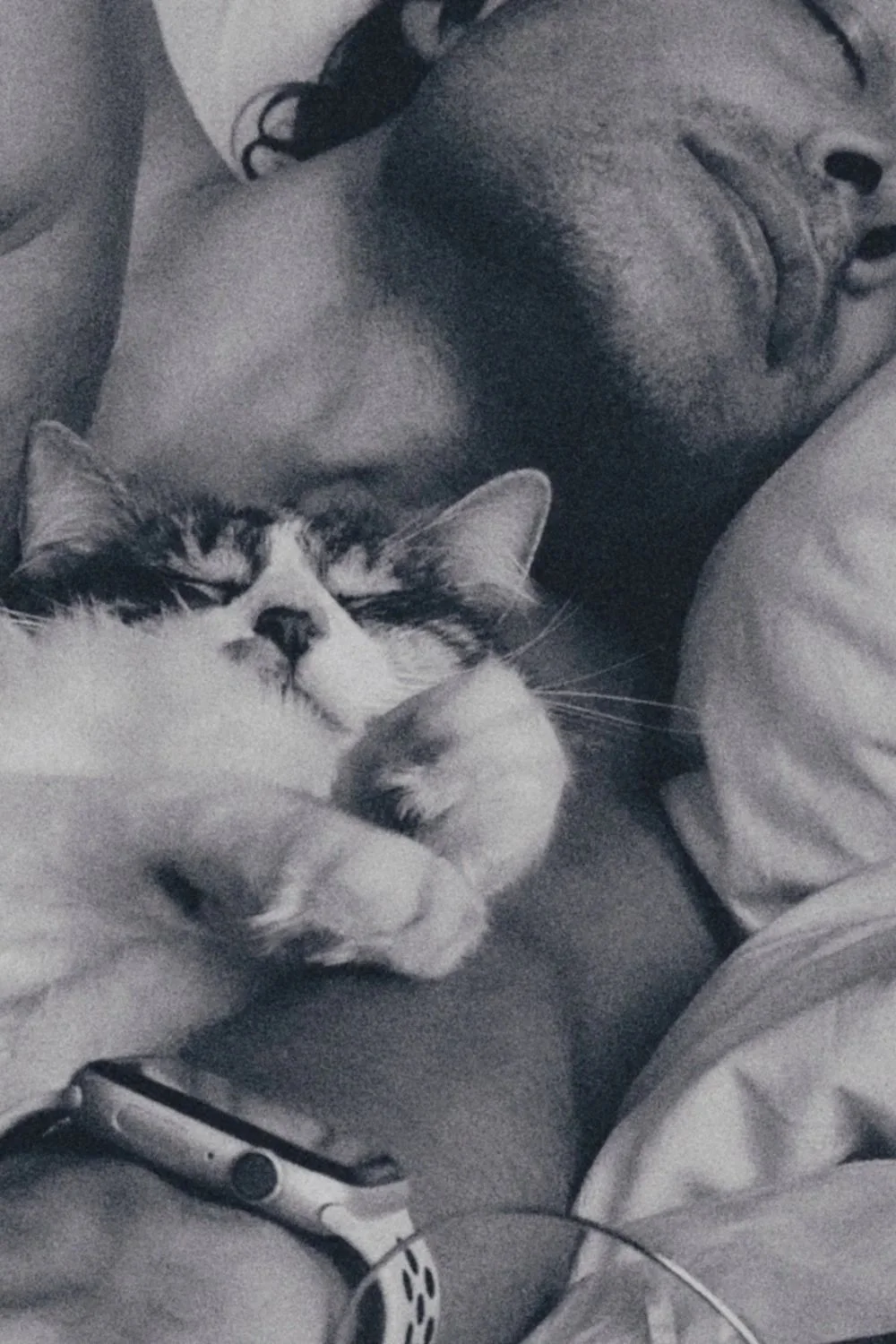
for years, i was proud of not sleeping.
that is the culture you are raised in as a young surgeon. the long shift, the short night, the coffee that becomes a personality — it is worn like a badge. you convince yourself you are the exception, the one who runs fine on four hours. everyone around you is saying the same thing, so no one questions it.
i questioned it eventually, because my body made me.
here is what i learned, from the inside, about what a broken night actually does. it is not just tiredness. tiredness you can push through. sleep loss is subtler and more dangerous than that. your judgement narrows before you notice it has. your patience thins. you make small errors and, worse, you become slightly less able to see that you are making them — the part of the brain that checks your own work is one of the first to go quiet. your mood flattens. food stops being fuel and becomes a way to stay awake. and none of it announces itself. you feel, mostly, fine. that is the trap. sleep deprivation is the one impairment that also impairs your ability to judge how impaired you are.
the mechanism, plainly
we are day animals. every cell in the body keeps time to a roughly 24-hour clock, set by daylight, and that clock decides when our hormones rise and fall. cortisol — the stress hormone — is meant to follow it: high in the early morning to wake you and get you moving, low at night so you can rest. it is built for short bursts and daily rhythm, not for being held up around the clock.
night shifts break that clock. you are awake and working when cortisol should be at its lowest, and the body keeps the stress hormone raised when it ought to be winding down. hold cortisol high, night after night, and the effects are not subtle. it drives hunger — and not for salad, but for fast, calorie-dense food. it pushes the body toward insulin resistance, the first step on the road to weight gain and type 2 diabetes. and it quietly steals the one thing a surgeon needs most: clean, unhurried mental clarity.
this is not opinion. when researchers deliberately misalign people's body clocks in the lab — the controlled version of shift work — glucose and insulin climb, the fullness hormone falls, blood pressure rises, and the cortisol rhythm flattens. across whole populations, night-shift workers carry a measurably higher risk of obesity and type 2 diabetes. and it goes deeper than metabolism: the brain does much of its essential maintenance only during deep sleep, including clearing the very proteins linked to long-term cognitive decline. skip the sleep, and that cleaning does not happen. you cannot bank it. you cannot outwork it.
what changed me was not a study, though. it was noticing, honestly, who i was on no sleep — and who i was after a real night's rest. the difference was not small. it was the difference between a man reacting to his day and a man meeting it. the steady hands, the long view, the patience a patient deserves — all of it lived on the other side of sleep.
so i stopped treating rest as the thing i sacrificed to prove i was serious. i started treating it as part of being good at my work — not the opposite of it. protecting sleep is not softness. in a job where other people's lives pass through your hands, it may be the most responsible thing you do.
i do not romanticise it. some nights the job simply does not allow it, and you do what the work requires. but i no longer wear exhaustion as a badge, and i no longer trust the version of me that has not slept. i have met him. he is not the man i want operating, deciding, or living.
and i will say plainly what i believe: the human being was not designed to work through the night. we can do it — medicine could not run without the people who do — but we do it against the body, not with it. five nights in a row is enough to produce what is essentially self-inflicted jet lag: the same misalignment, the same fog, without the holiday.
the oldest medicine is also the one we are proudest of skipping. i skipped it for years. i would not advise it.
— A Esmaeili
references
Van Dongen HPA, et al. The cumulative cost of additional wakefulness. Sleep. 2003;26(2):117–126.
Dawson D, Reid K. Fatigue, alcohol and performance impairment. Nature. 1997;388:235.
Scheer FAJL, et al. Adverse metabolic and cardiovascular consequences of circadian misalignment. PNAS. 2009;106(11):4453–4458.
Gao Y, et al. Association between shift work and risk of type 2 diabetes mellitus. Chronobiology International. 2020;37(1):29–46.
Spiegel K, Leproult R, Van Cauter E. Impact of sleep debt on metabolic and endocrine function. The Lancet. 1999;354(9188):1435–1439.
Shokri-Kojori E, et al. β-Amyloid accumulation in the human brain after one night of sleep deprivation. PNAS. 2018;115(17):4483–4488.